The Wall Street Journal recently reported on the rapid rise of Claude Code and how quickly it has spread beyond the usual circle of AI enthusiasts. That article should cause many CEOs and technology leaders to pause and reconsider the AI strategies they have already committed to. For the last couple of years, most enterprises have followed a very familiar playbook. They selected an approved corporate platform, standardized on a vendor stack such as Gemini Enterprise or Microsoft Copilot, launched formal transformation programs, and brought in outside partners to implement carefully defined use cases. This approach made sense because it mirrored how organizations adopted cloud computing, analytics, and ERP systems. It was orderly, governable, and predictable.
Claude Code points to a very different model, and that difference matters more than it first appears.
A Small Personal Experiment
Over the holidays I decided to experiment directly with Claude Code to understand what this new generation of agentic tools feels like in practice. One of the simplest things I tried was connecting it to my Spotify account and Google Home speakers. Instead of opening any applications, I could simply type an instruction such as “create a playlist and play something in the background so I can focus on coding.” The agent figured out what needed to happen, selected appropriate music, and executed the necessary steps across multiple systems.
What stayed with me was not how impressive the technology was. I expected it to work. What surprised me was how quickly the very idea of using software disappeared. I never opened Spotify, never navigated menus, and never thought about interfaces at all. I expressed intent, and the system took care of the rest.
That experience reshaped not only how I think about the future of enterprise software, but also our relationship with AI agents (hence AI adoptions in enterprise).
Two Fundamentally Different Paths
Most organizations currently think about AI through a platform-centric lens. In this model, AI adoption is a structured corporate initiative. Leaders pick approved platforms, define priority use cases, create formal governance models, and measure success through carefully calculated return on investment. Implementation is often led by external specialists who design solutions and deliver them back to the business. This is a rational approach because it fits existing budgeting processes and risk management frameworks.
Agent-first tools like Claude Code represent a second path that operates by entirely different rules. Instead of large platforms and centralized programs, they rely on simple tools that ordinary employees can use directly. Innovation happens through bottom-up experimentation rather than top-down roadmaps. Workflows are automated by the people who understand them best, and iteration cycles are measured in hours rather than months.
Both paths can create value, but they do so in very different ways.
Why the Second Path Is So Disruptive
The real breakthrough of tools like Claude Code is not simply that they can write code. The breakthrough is who can use them. Non-technical users can now automate meaningful parts of their daily work without waiting for formal projects or specialized teams. They can connect systems, generate scripts, and streamline processes on their own. The people who live with the frustrations of broken workflows finally have the means to fix them directly. Below is a real example how Claude Code Skills were developed to automate company’s financial tasks (courtesy @Roland_WayneOZ at X)
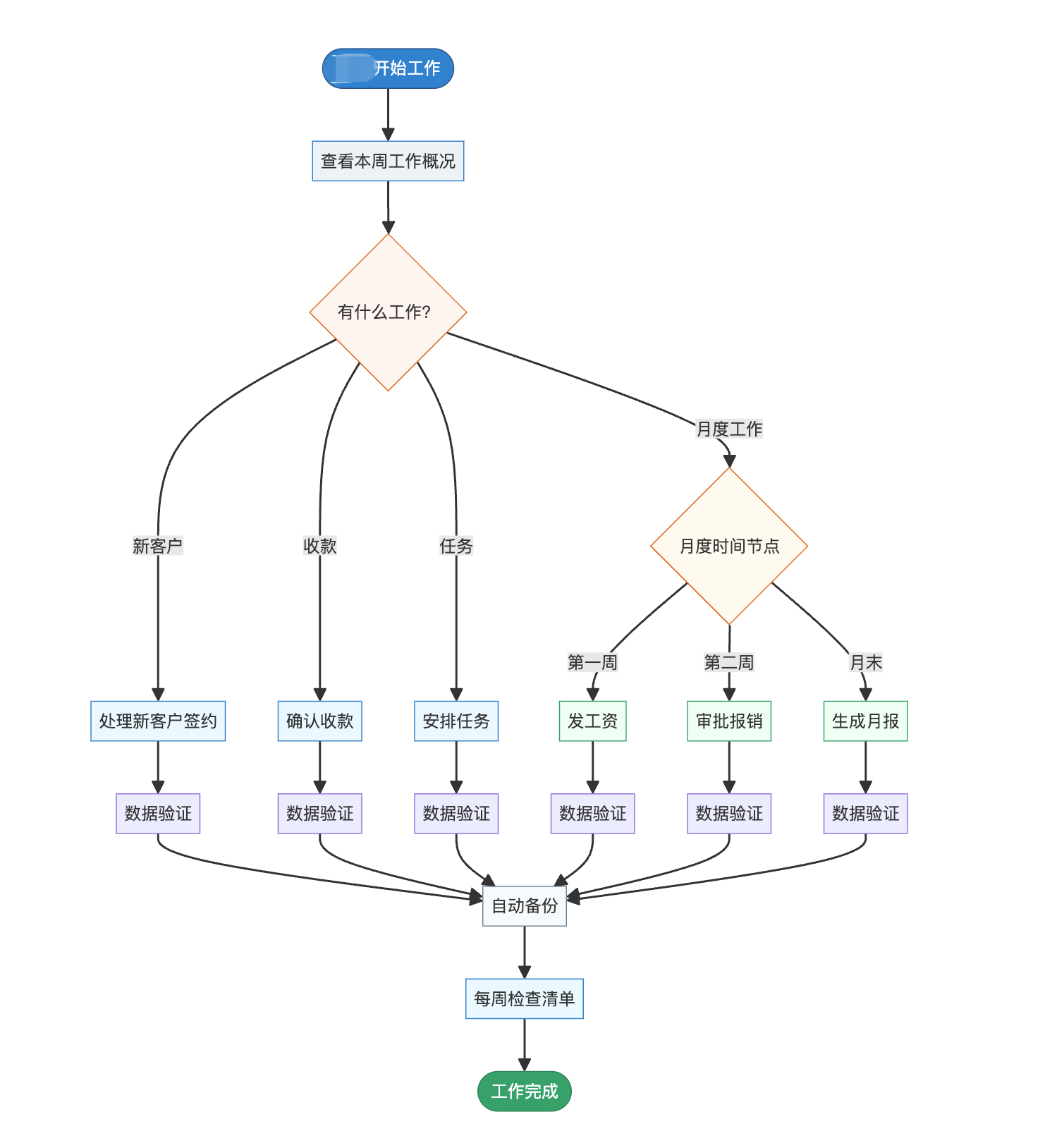
Traditional AI programs assume that value flows from experts to users. Analysts and consultants identify problems, engineers build solutions, and employees adopt whatever is delivered to them. Agent-first AI reverses that logic. The employee closest to the problem becomes the creator of the automation. Importantly, this does not mean they need to handcraft everything themselves. Tools like Claude Code can generate skills, and tools like Cursor can create reusable rules, in the same way they generate code. The user only needs to express requirements clearly. I think of this as “use AI to teach AI.” When that happens, feedback loops become faster and the resulting solutions are far more practical.
A Different Kind of Return on Investment
Platform-centric AI looks for value in a small number of large, measurable projects. That will always be important, especially for strategic systems that require deep integration and governance. But user-led AI creates value through a completely different mechanism. Instead of a few big wins, it generates thousands of small improvements that accumulate over time. Each local optimization may be modest on its own, but together they can transform how work gets done.
These improvements compound because knowledge spreads organically across teams. When one employee discovers a better way to automate a task, others can copy and adapt it almost immediately. The organization learns faster than any formal program could enable.
The Real Strategic Question
The decision facing enterprises is not simply which AI platform to choose. The deeper question is how to balance these two approaches. How much of an organization’s AI strategy should be driven by large, centrally managed programs, and how much should be driven by empowered employees experimenting with simple agent tools?
Companies that rely exclusively on top-down initiatives risk missing the bottom-up revolution already happening on individual desks. At the same time, organizations that ignore governance and integration will struggle to scale what they learn. The challenge is not to pick one path over the other, but to recognize that both are necessary.
Rethinking What Transformation Means
Claude Code does more than introduce a new category of tool. It challenges long-held assumptions about who creates AI value and how innovation happens. It suggests that the most effective AI strategy may not be the one with the largest budget or the most elaborate architecture. It may be the strategy that puts capable agents directly into the hands of everyday employees and trusts them to improve their own work.
Enterprise AI is not only about deploying smarter software. It is about changing the way people work and how organizations learn. Big platforms and formal programs will continue to play a vital role, but alongside them a quieter transformation is emerging. That transformation is driven by individuals who can now automate their own problems and share what they learn with others.
This shift is easy to dismiss from a distance. It becomes impossible to ignore once you experience it firsthand.